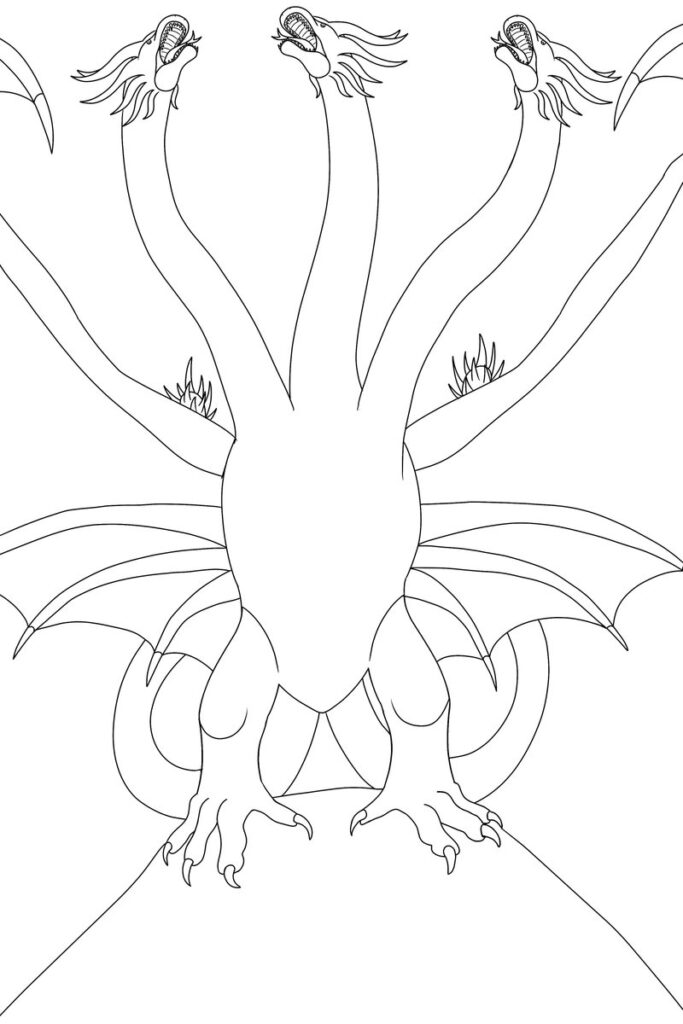
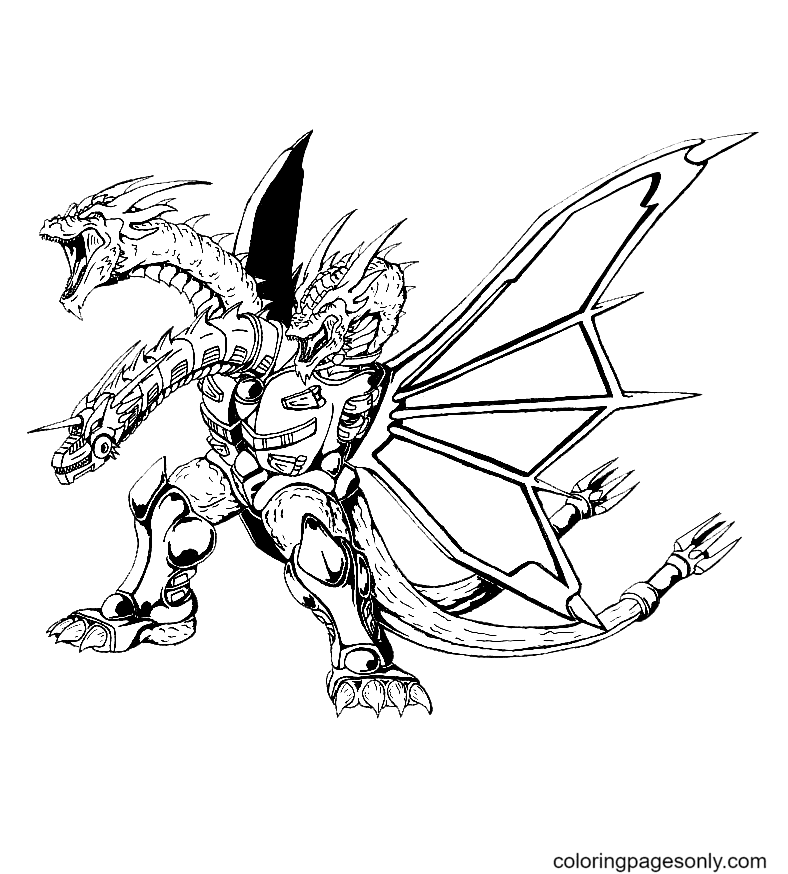
king ghidorah coloring page invites fans to color a familiar monster with bold outlines and ample space for shading. It balances detail and simplicity so colorists can practice layering, contrast, and color harmony while preserving the three-headed silhouette.
Coloring pages featuring King Ghidorah typically present a strong, cinematic silhouette with three heads, sprawling wings, and a dynamic stance. Beginners appreciate clear outlines, while more experienced colorists enjoy shading to create depth in the dragon's features. With a few palette choices, you can experiment with golds, silvers, or other vibrant tones to bring the creature to life. The scene works well whether you prefer a bold, graphic look or a more nuanced, sculpture-like finish. You can also try building texture on the wings using crosshatching or stippling for added drama. Some colorists enjoy placing a subtle glow around the heads to suggest energy or motion. This diversity makes the king ghidorah coloring page a versatile canvas for many styles.
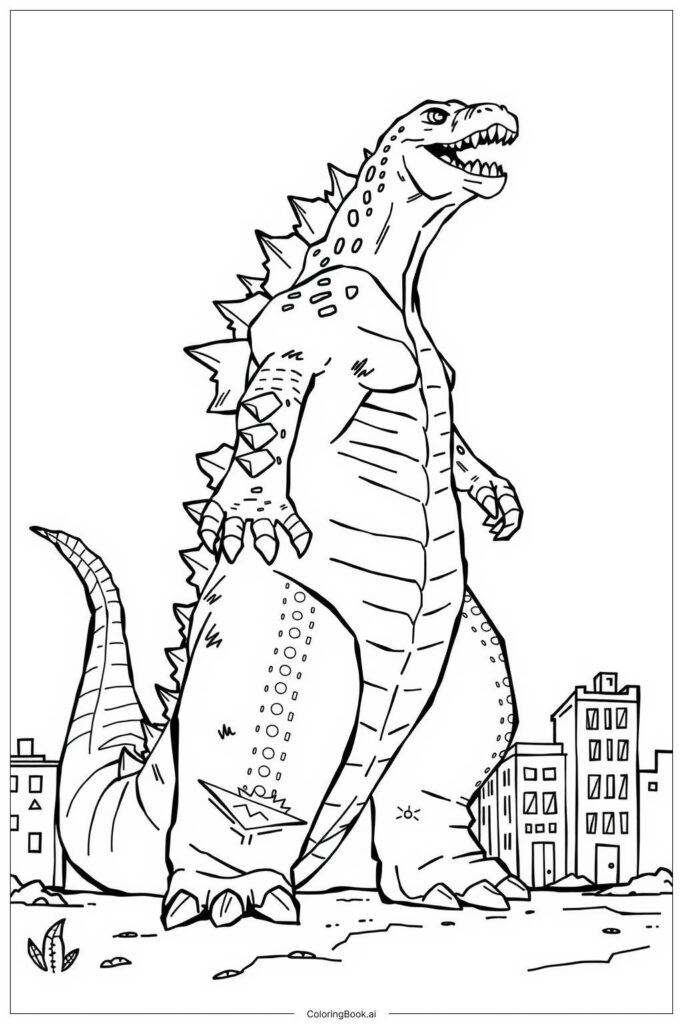
king ghidorah coloring page
Think about the paper and tools you use; a sturdy white drawing paper or cardstock helps prevent bleed-through when using markers. Pencils offer subtle shading, while colored pencils let you build rich layers without overpowering the line art. If you color digitally, adjust the brush settings to mimic colored pencils for a traditional look. Start with light layers and gradually deepen color to control value. Remember to leave highlights to keep the image vibrant. Using a light touch can help keep the three heads readable, especially when you plan strong color contrasts. Consider practicing on a rough scrap sheet before committing to the final page.
Try color palettes that suit your mood or project. For classic monster vibes, metallics and deep jewel tones can give the heads a regal, fearsome look. For a playful take, you can lighten the palette or use nontraditional colors. You might experiment with a monochrome scheme or a sunset gradient across the wings. You can also map colors to different sections (one head a hue, another head complementary, the wings a contrasting family) to explore color relationships. Keeping notes of your color choices helps you recreate or modify patterns in future pages.
Practical variations
If the page is too detailed, start with grayscale shading to plan values before adding color. For a digital version, you can create separate layers for each head to tweak colors independently. You can also print multiple copies to test color schemes before settling on a final look. A step-by-step approach keeps the process enjoyable and reduces frustration. Don’t be afraid to step away for a few minutes and return with fresh eyes.
For younger colorists, simplify the design by focusing on large shapes and bold color blocks. For older hobbyists, you can add fine line work and background textures to increase complexity. Both approaches help you enjoy the process without feeling overwhelmed. If you want a collaborative project, you can invite a friend to color a section and compare techniques afterward.
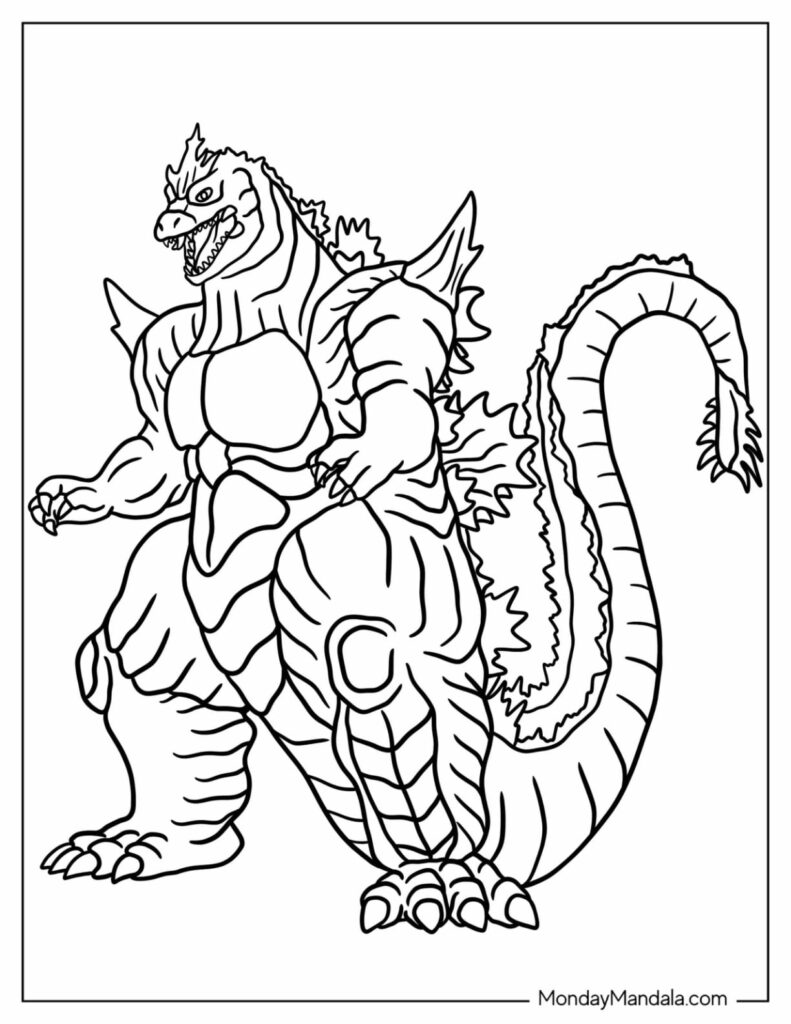
Printing multiple copies lets you experiment with different color schemes side by side. You can save your favorite results and revisit them later for inspiration. Keeping a small color log can help you recall which palettes you enjoyed most. Over time, you may notice patterns in your preferences that guide future pages. Some colorists like to label their finished versions with the palette names they used, for easy reference.